How It Works

Make the Most Complicated 96 Hours before Surgery Feel Simple

Pip Care steps into the most fragmented, cancellation-prone window in healthcare, the T-96 to T-48 perioperative period, and turns risk into readiness. This isn’t just software. It’s a transformation layer built on Technology, AI, and intentional Human intervention to protect patients, staff, schedules, and outcomes.
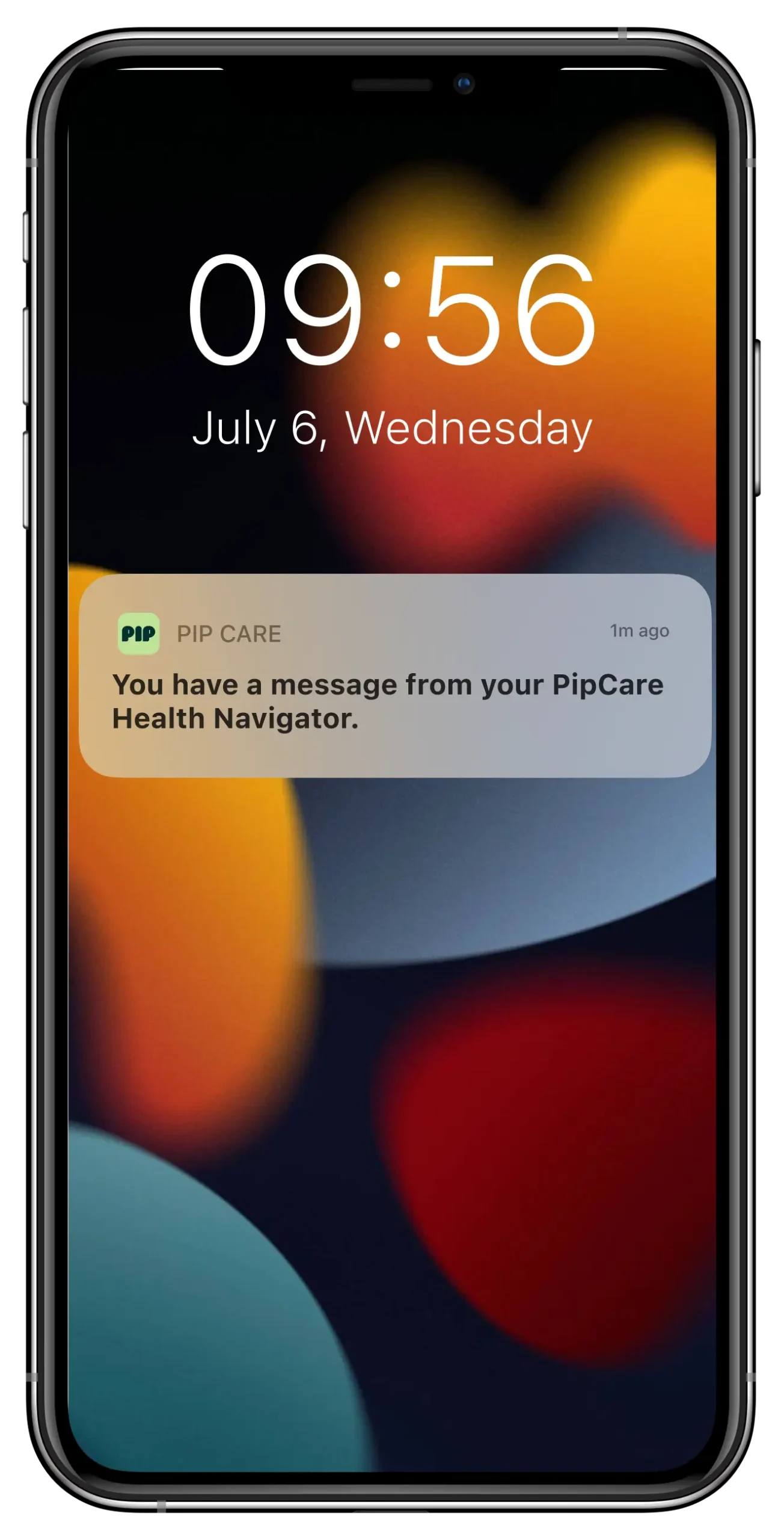

Smartphone lock screen displaying time 09:56, date July 6, Wednesday, and a notification from PipCare Health Navigator.

Make the Most Complicated 96 Hours before Surgery Feel Simple

Pip Care steps into the most fragmented, cancellation-prone window in healthcare, the T-96 to T-48 perioperative period, and turns risk into readiness. This isn’t just software. It’s a transformation layer built on Technology, AI, and intentional Human intervention to protect patients, staff, schedules, and outcomes.
How It Works

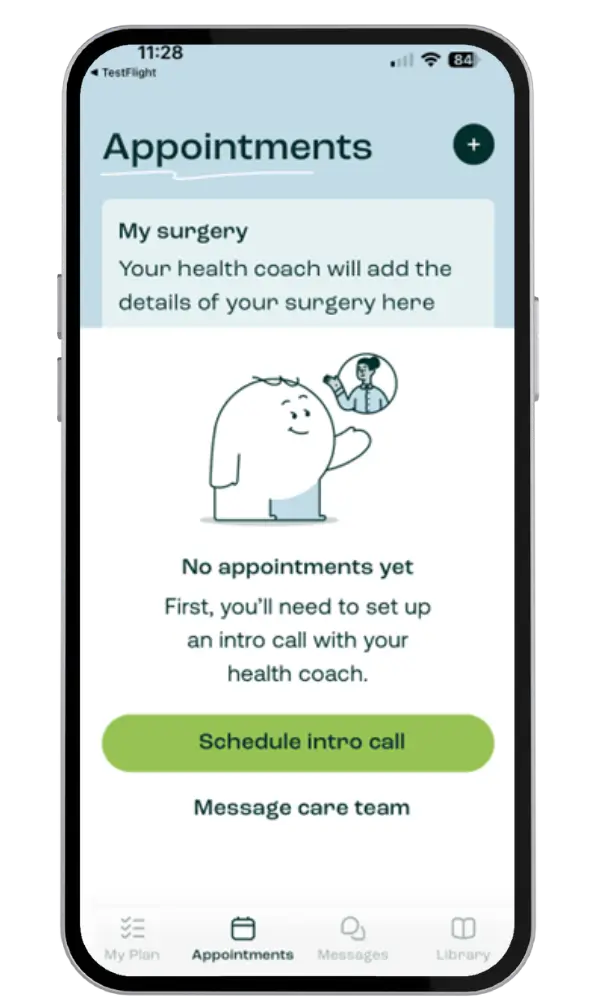
Smartphone screen showing an Appointments section with “No appointments yet,” a cartoon character, and a green “Schedule intro call” button.

The Countdown

Most platforms stop at the reminders and alerts, triaging risk signals back to the care team for follow-up.

T‑96 hours

The final high-stakes window before surgery. Any remaining issues can result in day-of cancellations, OR disruption, and operational chaos.

T‑48 hours

Patients are completing early prep tasks while they're confirming instructions, and reviewing educational materials.

T‑24 hours

Last-minute checks and risk signals emerge. Patients may forget critical steps, and staff are stretched managing exceptions.

Pip Care

Technology and the 80/20 Rule

Digital reminders, automated education, and workflow tracking handle most tasks make up roughly 80%.

The remaining 20%, where human behavior, barriers, and unexpected issues appear, is where cancellations and chaos occur.

Pip Care detects stalled progress and risk signals across the T‑96 to T‑48 hour window using human intervention before problems reach the care team.

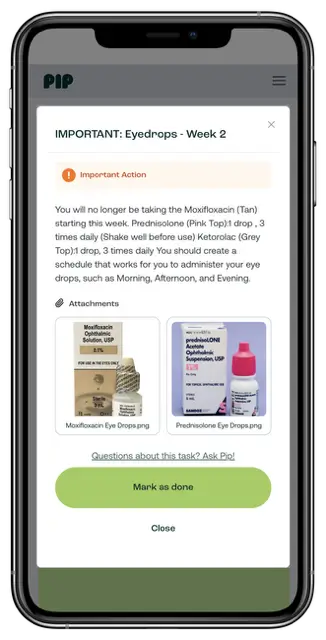
Mobile screen showing an onboarding task titled "IMPORTANT: Endpoints - Week 2" with two attachment thumbnails and a green "Mark as done" button.

The Care Pyramid

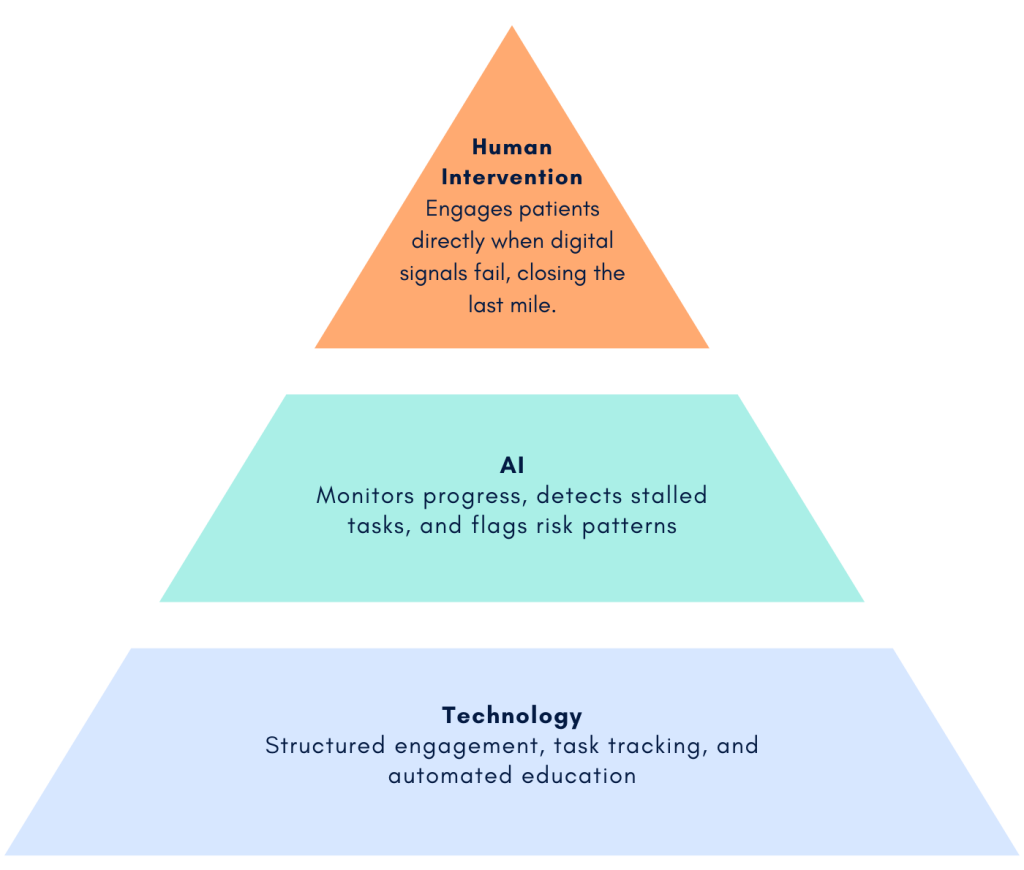
Pip Care is built as a layered system:

A three-level pyramid diagram labeled Technology at the base (structured engagement, task tracking, and automated education), AI in the middle (monitors progress, detects stalled tasks, and flags risk patterns), and Human Intervention at the top (engages patients directly when digital signals fail).
A cute white rounded cartoon character with a small smile holding a card against a light blue background.

Technology

Structured engagement, task tracking, and automated education

AI

Monitors progress, detects stalled tasks, and flags risk patterns

Human Intervention

Engages patients directly when digital signals fail, closing the last mile

Pip Care

Human Escalation, By Design

This escalation is risk-driven, not convenience-driven, protecting staff bandwidth and OR time.

When digital signals indicate risk:

A woman and an older man in white shirts look at a smartphone together.

Stop Managing Alerts. Start Closing Loops.

See how Pip Care reduces cancellations, protects revenue, and stabilizes perioperative operations.